 01
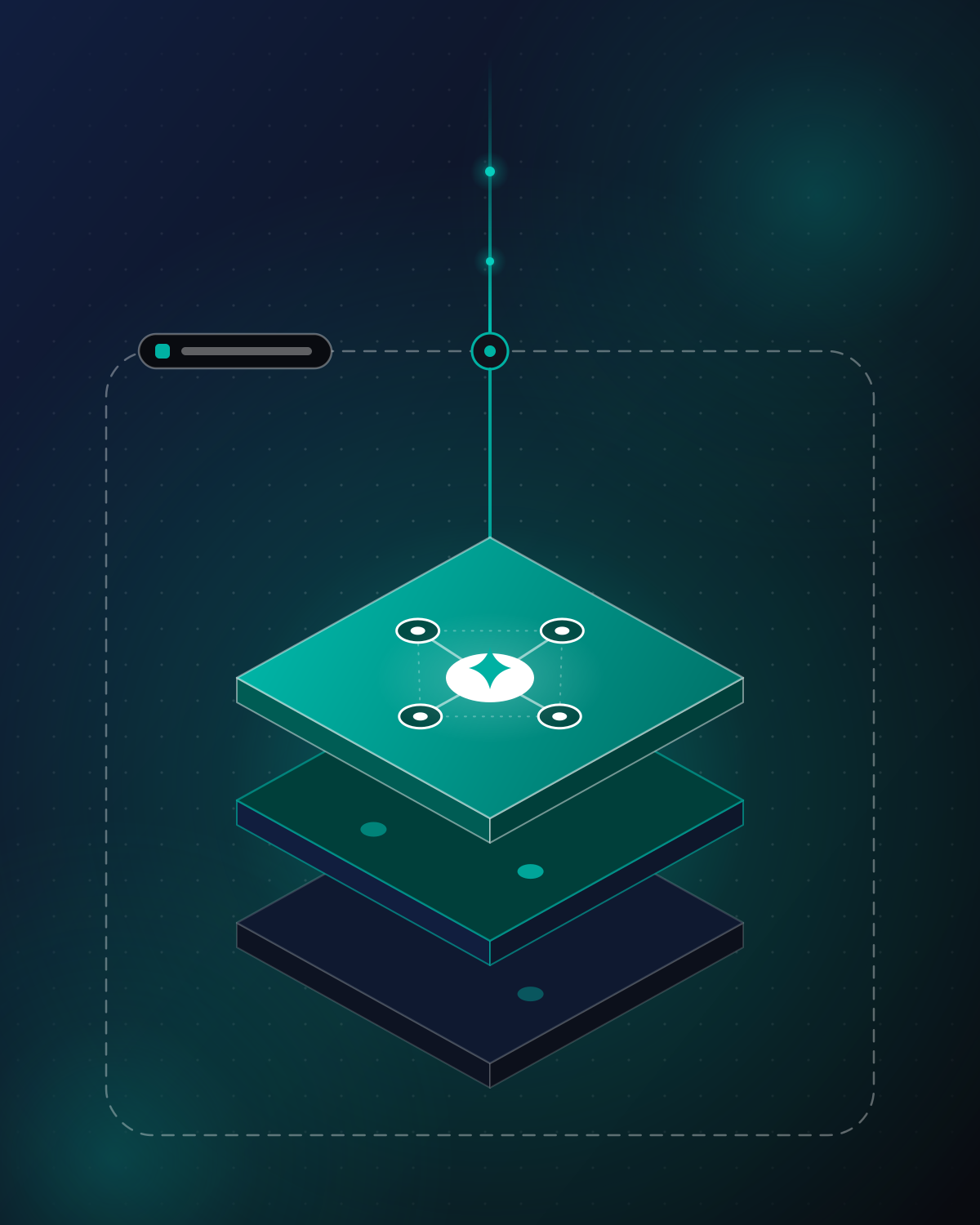
01Releases you can trust
Agents are code. Publishing creates an immutable, SHA-256 content-hashed release; every run pins the exact release it started on.
Canary, roll back, or promote the identical release across environments.
Source availableby Agentifiers
Deployments.ai is the agent platform you embed in your product. Agents as code, immutable releases, a governed model gateway, tools and MCP, sandboxes, memory, channels, agent email, workflows, and observability — one control plane you can run in your own AWS account.
{
  "apiVersion": "agents.deployments.ai/v1",
  "kind": "Agent",
  "metadata": {
    "key": "example.assistant",
    "name": "Example Assistant",
    "version": "1.0.0"
  },
  "spec": {
    "instructions": "Use the declared capabilities to complete the request.",
    "model": {
      "id": "openrouter/default",
      "fallbackIds": ["openrouter/fallback"]
    },
    "memory": { "mode": "workspace" },
    "capabilities": {
      "tools": [{
        "authorization": "workspace",
        "name": "records.read",
        "required": true,
        "requiredScopes": ["records:read"]
      }]
    },
    "runtime": { "modelTools": ["records.read"] },
    "sandbox": { "mode": "none" },
    "triggers": ["api", "schedule", "workflow"]
  }
}$ deployments dev agent.json --message "Summarize ticket 812"
$ deployments release promote --target-environment "$PROD_ENV"
$ deployments trace list360+
operations in one public API, mirrored by the CLI
170+
integration providers in the catalog
130+
vendor-hosted MCP servers
1
thread and run model for every channel and trigger
Counts come from the current development contract and catalogs.
Why Deployments.ai
Stop stitching model calls, secret stores, sandboxes, webhooks, and dashboards together yourself. Deployments.ai is the layer between agents defined as code and a runtime you can trust in production — built so your product team ships agents instead of infrastructure.
01Agents are code. Publishing creates an immutable, SHA-256 content-hashed release; every run pins the exact release it started on.
Canary, roll back, or promote the identical release across environments.
 02
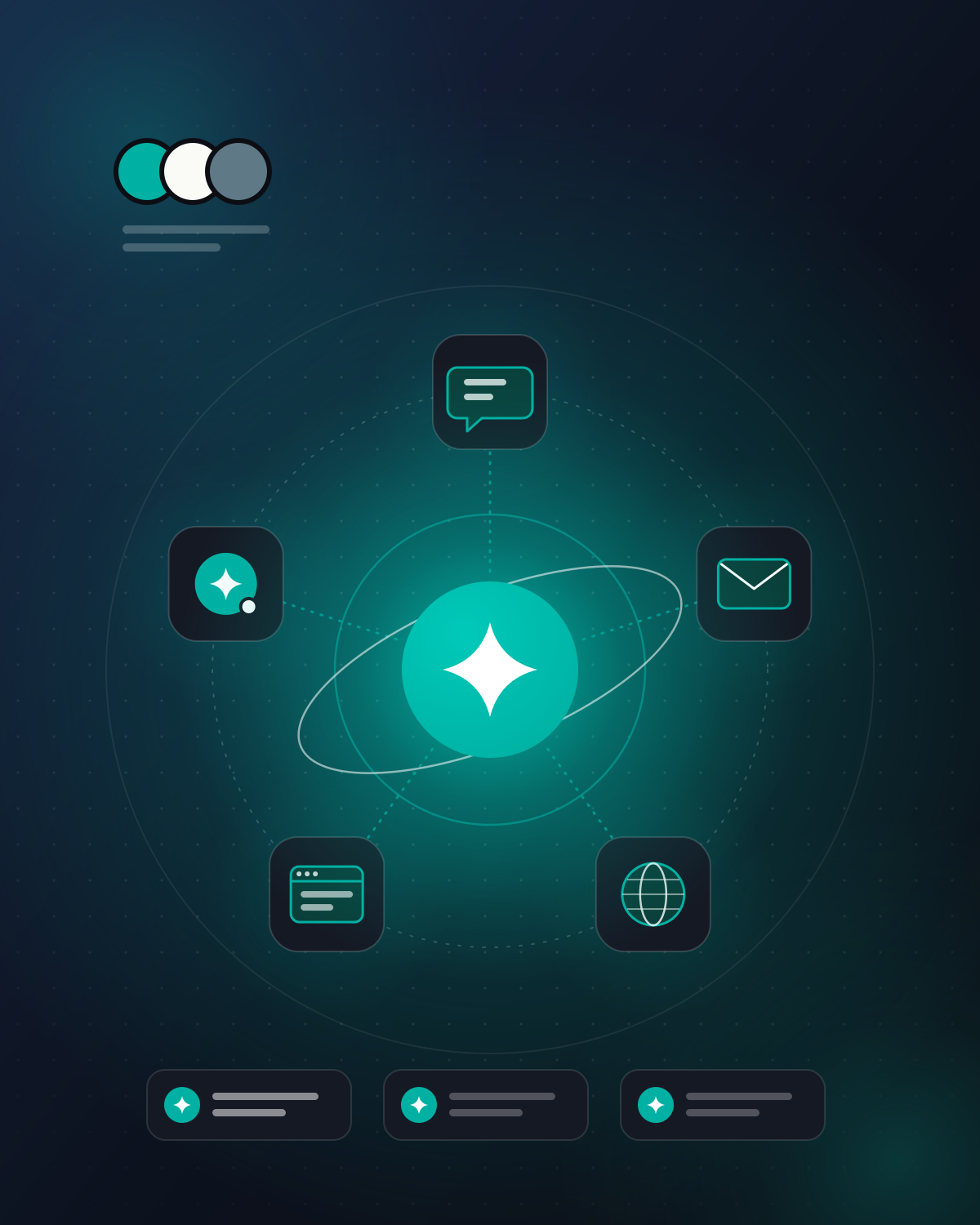
02Slack, Telegram, RCS business messaging, and real agent inboxes on your domain — all landing on the same thread and run model as your API.
One conversation model, wherever your users are.
 03
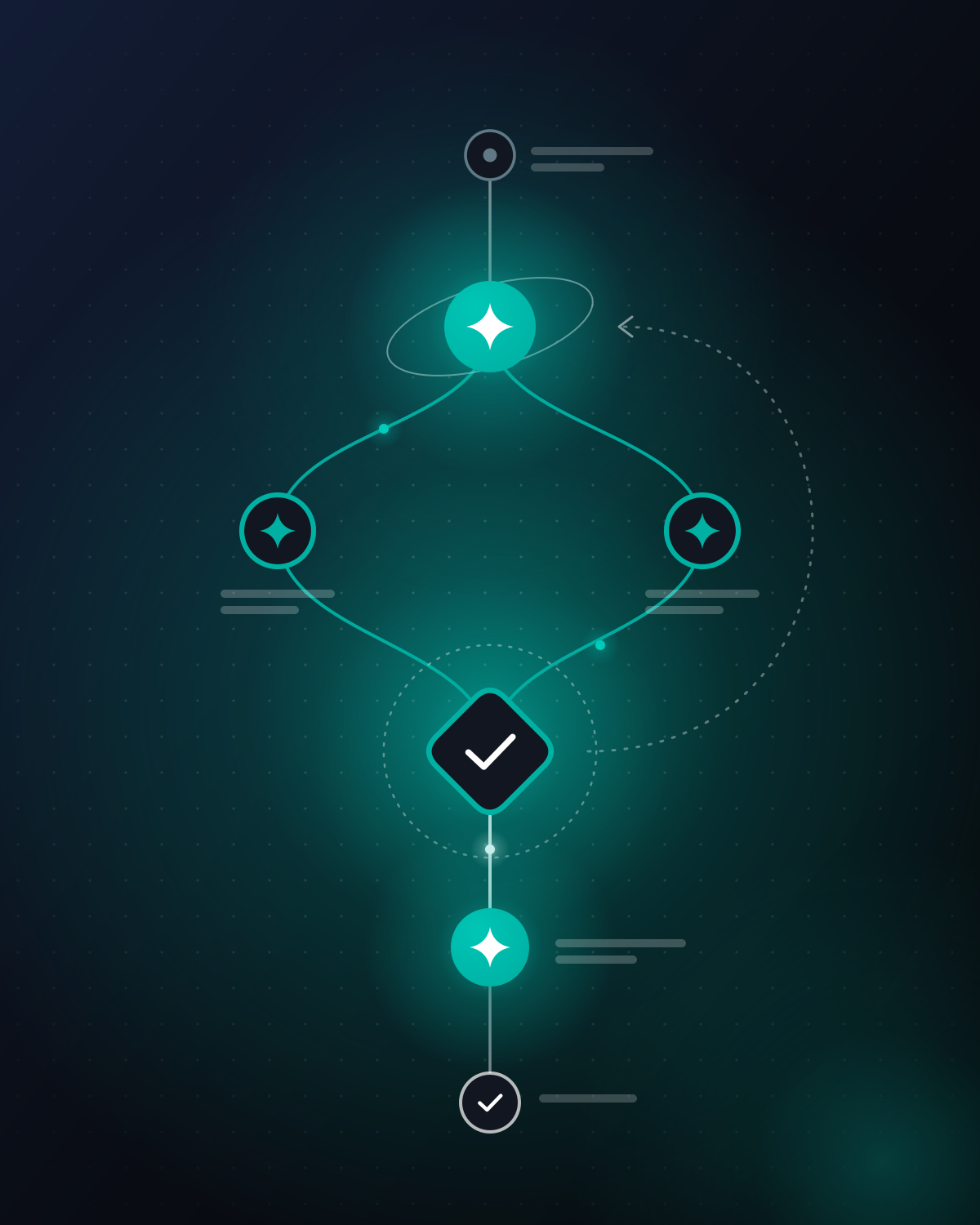
03MCP servers, client-executed tools, HTTP callbacks, sandboxed code, and durable workflows — with approvals before risky actions run.
Secrets are injected at execution, never into model context.
 04
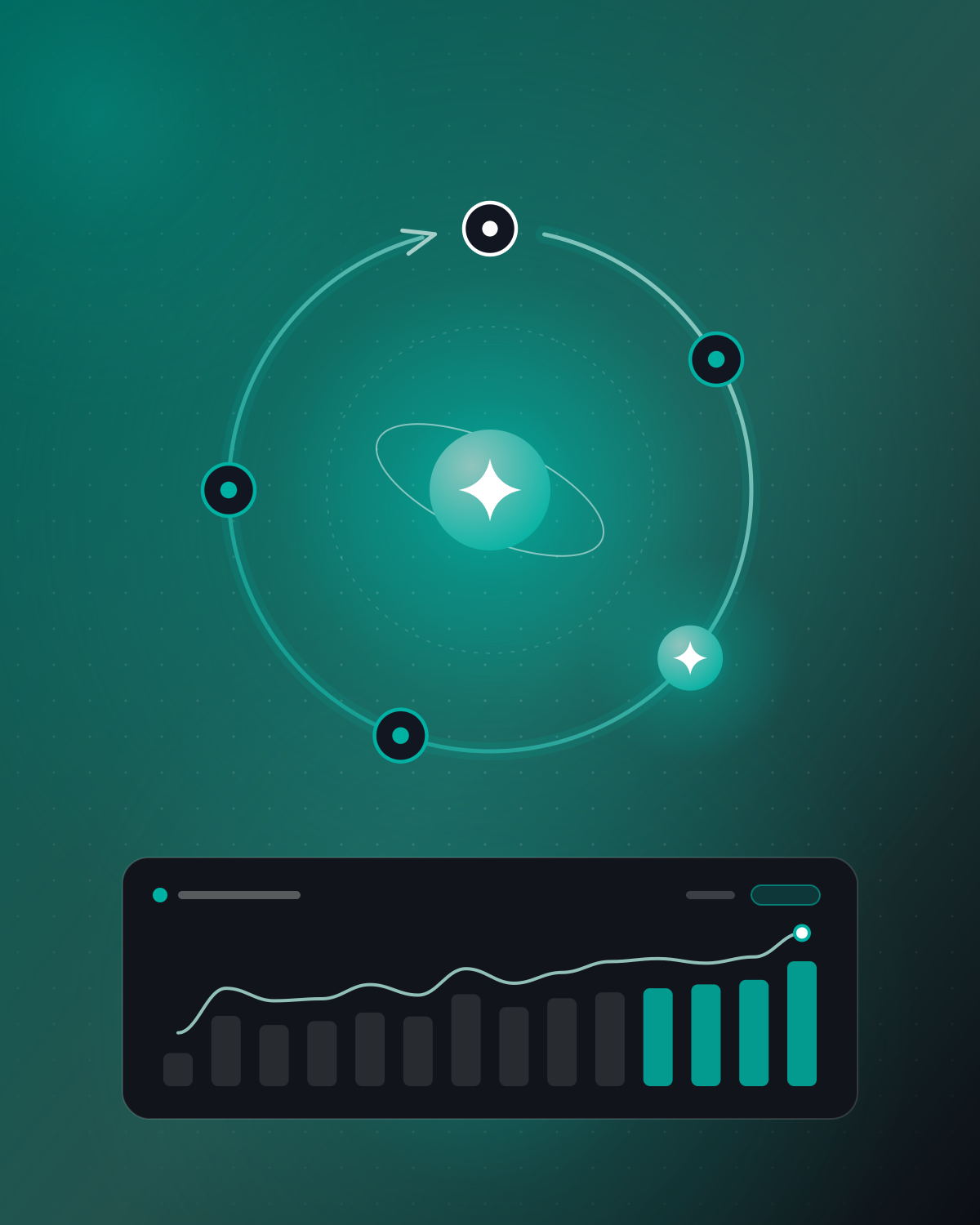
04Traces, spans, metrics, semantic events, evaluations, and usage metering are part of the runtime, not a dashboard you bolt on later.
Inspectable, comparable, and metered per environment.
The lifecycle
01
Write the agent as code: instructions, model, tools, memory, sandbox, and triggers in one versioned manifest.
02
Run an unpublished manifest on the hosted worker with deployments dev — no definitions, releases, or deployments created.
03
Publishing creates a numbered, immutable release whose content hash is computed server-side.
04
A deployment pins a release in an environment, with that environment's credentials and tool policies.
05
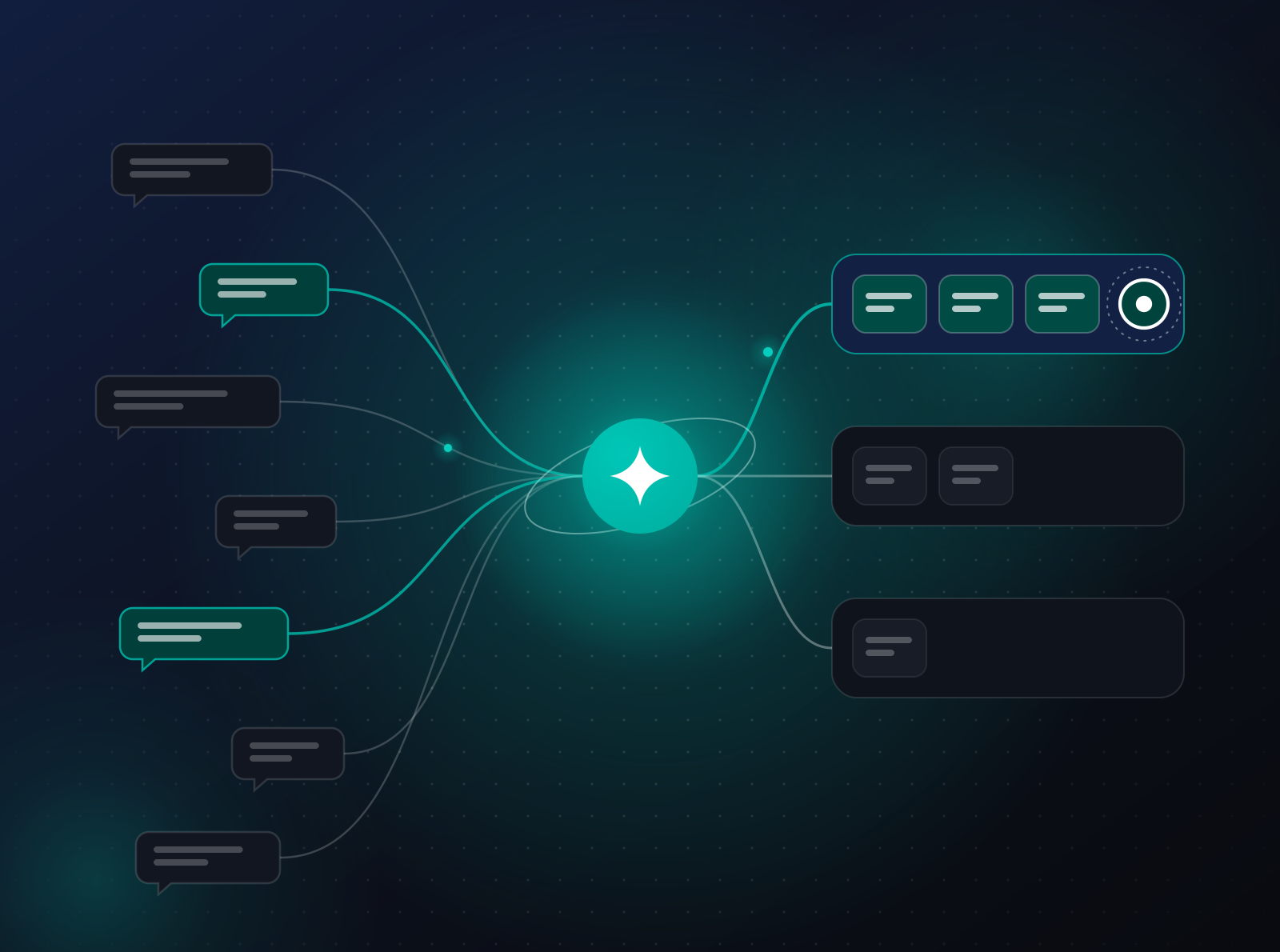
API calls, chat, email, schedules, heartbeats, webhooks, and channels all converge on one thread and run.
06
Canary a candidate, roll back, or promote the identical release to another environment without a rebuild.
One public contract across the API, SDK, and CLI.
Capabilities
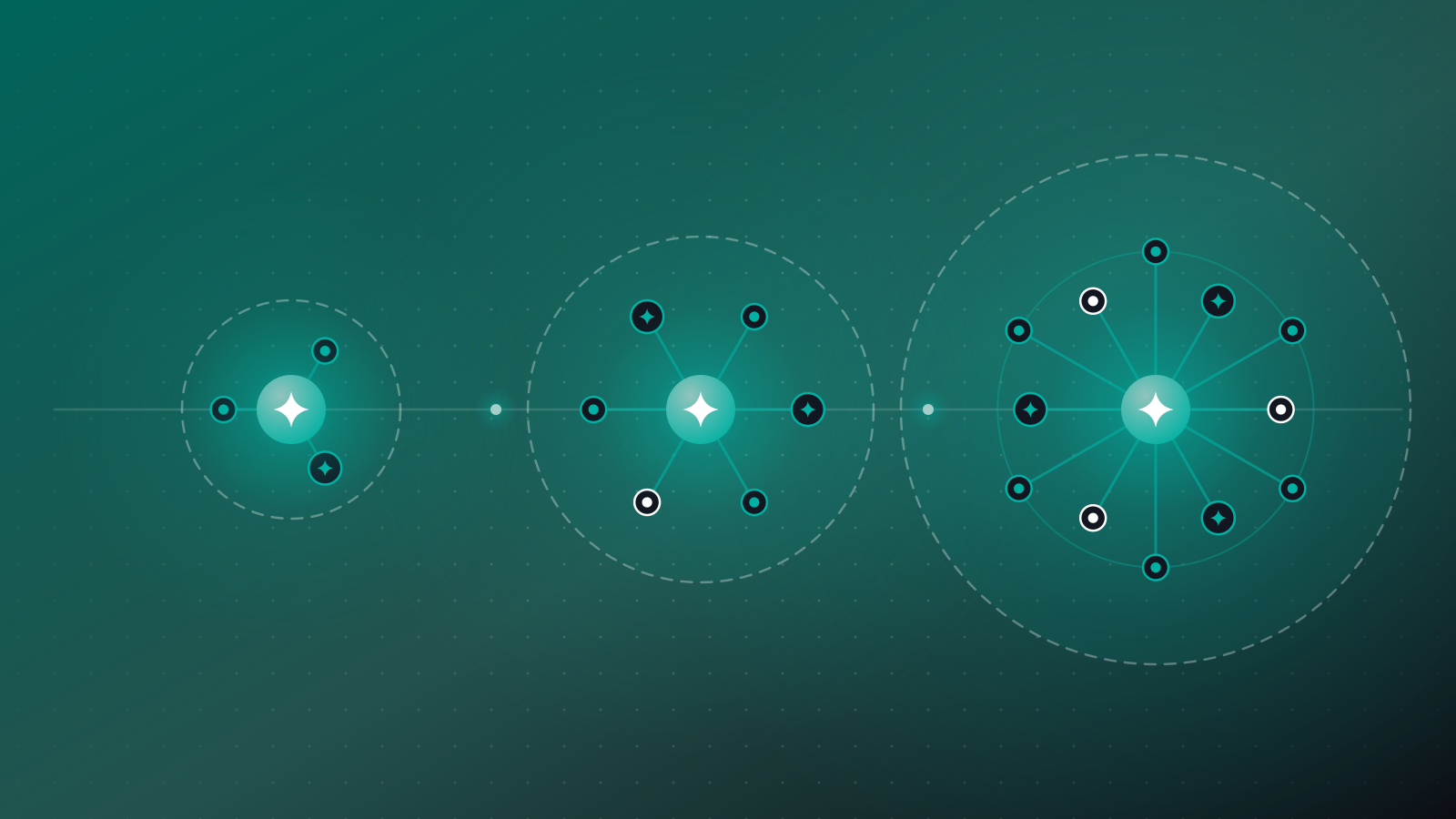
Twelve capability areas ship together, so your agents get production plumbing on day one instead of a roadmap.
Bring your own cloud
The platform is provisioned with OpenTofu into any AWS account you point it at — one dedicated account per environment. Canonical state stays in your DynamoDB tables and KMS-encrypted S3; provider keys stay in your model gateway.
Run it your way
The same platform and API in every case. Agentifiers — the team behind Deployments.ai — can set it up in your AWS account or run it for you.
Teams who want to run it themselves
Run the full platform in your own AWS account, on your own schedule.
Teams who want BYOC without the platform work
Agentifiers deploys and configures Deployments.ai in an AWS account in your AWS Organization and gets your first agent into production.
Teams who want to ship without running infrastructure
Use the platform without operating it. Agentifiers runs, upgrades, and monitors it; your engineers build agents.
Use cases
Product teams
Ship agent features your customers use in your app. Agents call functions inside your product through client-executed tools, stream responses into your UI, and keep memory and tool authorization scoped to each customer's workspace.
Vertical software
Build a focused product for one industry on a shared agent runtime instead of rebuilding infrastructure each time: releases, channels, agent email, approvals, and governance come with it.
Customer experience
Agents read tickets and inbound email, pull context through connectors such as Zendesk, Linear, and Notion, draft replies, and wait for a person's approval before writing back.
FAQ
Deployments.ai is an agent platform you embed in your product. You define agents as code, publish them as immutable releases, deploy them per environment, and run them through one thread and run model — with the model gateway, tools, sandboxes, memory, channels, agent email, workflows, streaming, observability, usage, and governance already built in.
A framework is a library you call from your own code. Deployments.ai is the platform underneath: the control plane, the hosted runtime, the secrets vault, the tool and channel integrations, and the operational pipeline. You can still bring your own logic through tools, MCP servers, HTTP callbacks, and client-executed tools.
Agents call models through a private gateway with OpenAI, OpenRouter, and Amazon Bedrock as providers. Each environment has a model policy that decides which models are allowed, and agents can declare fallback models. Provider keys stay in the gateway.
The catalog includes more than 170 integration providers, among them 130+ vendor-hosted MCP servers such as GitHub, Notion, Linear, Sentry, Google Drive, Jira, and Zendesk. You can also add your own MCP servers, HTTP callbacks, hosted functions, and tools that run inside your own application. See tools and integrations.
In the Agentifiers/deployments repository on GitHub: the control plane and public contract, the agent runtime, tools and channels, the operational pipeline, the OpenTofu modules and deploy tool that install it, and the CLI and SDK. See what's in it.
The platform is licensed under the Functional Source License, Version 1.1, with the Apache License 2.0 as its future license (FSL-1.1-ALv2). FSL is a Fair Source license, not an OSI-approved one: the source is public, with one restriction on competing use. Each release becomes available under Apache 2.0 two years after it is published. The TypeScript SDK and the deployments CLI are MIT licensed.
You can read the code, self-host it, and modify it for your own use, including commercial use inside your business. You cannot offer it to others as a competing commercial product or service. White-labeling or reselling the platform to other companies is a competing use and needs a commercial license from Agentifiers; talk to us. If you are unsure whether your use competes, ask us first.
Agentifiers. The same team also helps companies set the platform up in their own AWS accounts, and offers it hosted and managed.